Copper Futures ETFs: A Direct Guide to Market Exposure
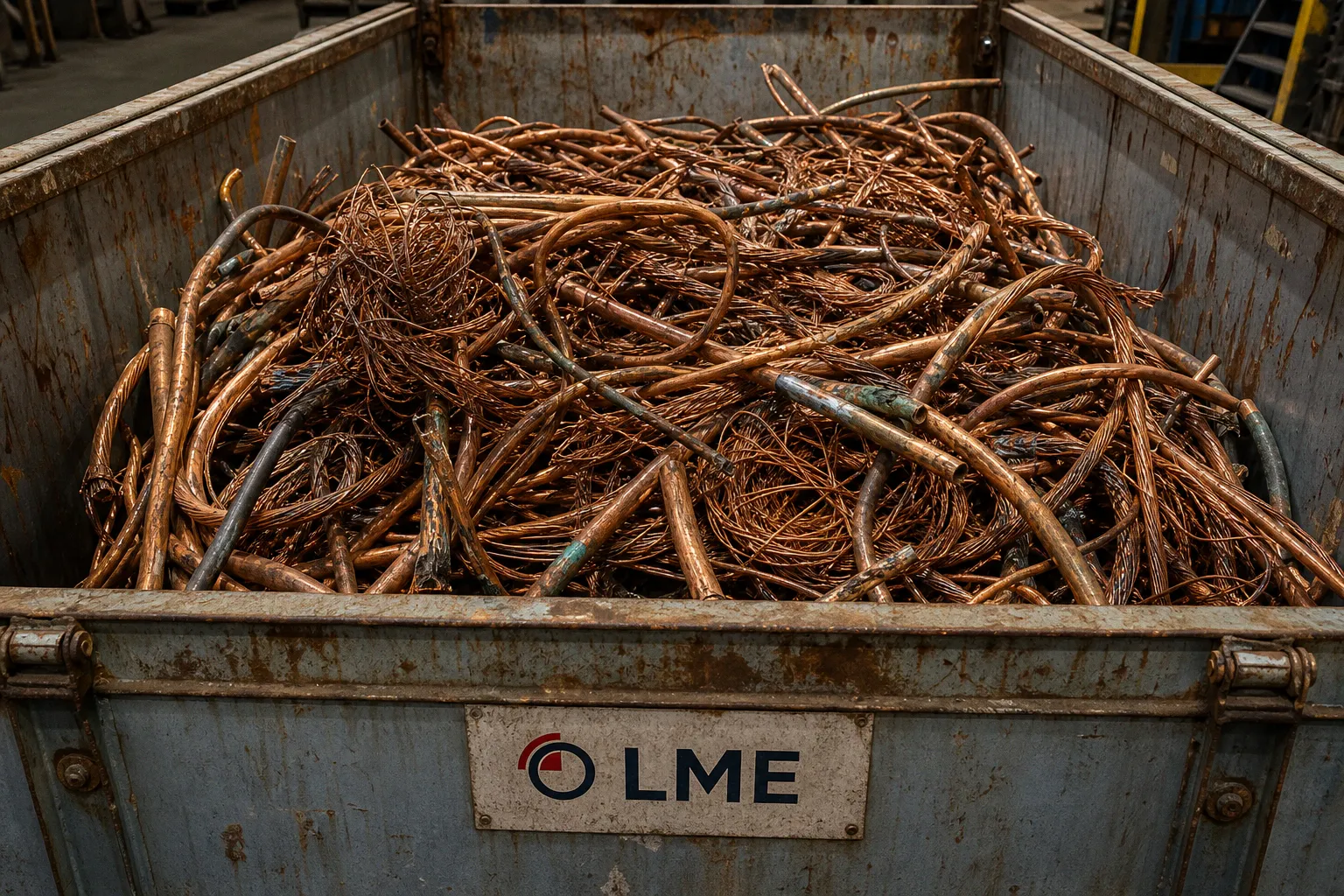
LME copper warehouse stocks have been drawing down for months — tonnage walking out the door in Antwerp, Singapore, and Rotterdam faster than Chilean and Peruvian miners can comfortably replace it.
Copper Futures ETFs: A Direct Guide to Market Exposure
A copper futures ETF never touches cathode. It never sits in a bonded warehouse. What it holds is a rolling stack of contracts, and that stack costs you money every month.
This guide walks the metal from the mine face through the smelter, the warehouse, and the exchange, then lands squarely on what an ETF actually does once it gets there. No supercycle talk, no green-revolution cheerleading — just the supply-chain mechanics that decide whether a copper futures ETF performs the way the spot price suggests it should.
The Mechanics: What You're Actually Buying
A copper futures ETF does not buy refined copper. It does not store cathode sheets in a vault somewhere. It buys futures contracts, typically on the COMEX, the U.S. exchange where the most-traded copper benchmark lives.
The flagship of this corner of the market is the United States Copper Index Fund (CPER), launched in 2011 and run by USCF Investments. CPER's job is straightforward in principle: hold a basket of COMEX copper futures and replicate the movements of the underlying metal price. The execution is where things get expensive.
Each COMEX copper futures contract represents 25,000 pounds of the metal. An ETF does not just buy one and forget about it. Futures contracts expire, typically on a quarterly cycle. To maintain exposure, the fund must sell the soon-to-expire contract and buy a longer-dated one. That transaction is called a "roll." It is the single most important cost a futures-based ETF passes on to the holder, and almost nobody talks about it on the way in.
For investors evaluating a copper etf list and weighing their options, the contract mechanics — not the marketing one-liner — are what separate the wrappers that work from the wrappers that bleed.
Two Exchanges, Two Benchmarks, One Metal
If you want to follow copper from a physical supply chain perspective, you have to know the difference between the COMEX and the London Metal Exchange. They are not interchangeable.
The COMEX, now part of the CME Group, lists copper in 25,000-pound contracts and is the dominant venue for U.S. and many international speculative flows. Price discovery on the COMEX is fast, leveraged, and largely a paper affair. The LME, by contrast, lists copper in 25-metric-tonne lots and remains the global hub for physical trade. When a buyer in Hamburg or a smelter in Zhuhai needs to price a real shipment, they look at the LME.
LME warehouse stock levels — the tonnage sitting in bonded facilities from Antwerp to Singapore — are the cleanest publicly available read on physical tightness. When those levels drop, it usually means one of two things: more metal is leaving the system (real demand), or fewer tonnes are being delivered into it (smelter disruption, freight bottlenecks, mine outages). Either way, the spot price responds before the ETF does, because the ETF is pricing off futures, not off warehouse receipts.
This gap is small in calm markets and brutally visible in tight ones. A copper futures ETF tracks the futures curve, not the physical market. If you want to trade the physical story, you have to understand that distinction before you put a dollar in.
The Roll Yield Tax: Contango and Backwardation Explained
Here is the part of the ETF pitch deck that gets buried.
When a fund rolls from a near-month contract to a farther-dated one, the price it pays depends on the shape of the futures curve. If the curve slopes upward — meaning deferred contracts trade at a premium to nearby ones — the market is in contango. The fund sells cheap and buys expensive. The difference comes straight out of returns. Over a year of steep contango, that drag can easily eat 5% to 15% of your price exposure, sometimes more in a sustained structural inversion.
If the curve slopes the other way — deferred contracts cheaper than nearby ones — the market is in backwardation. The fund sells expensive and buys cheap. That is roll yield in your favor, and it can meaningfully boost returns relative to the spot price.
Copper has spent long stretches in contango over the past decade. Funds like CPER have published results that diverge from the headline spot price not because the analysts got the demand picture wrong, but because the roll mechanics bled returns in the background. Anyone considering a copper futures ETF for long-term exposure has to weigh this structural drag against whatever near-term price view they hold.
Contango is not a fee. It is a tax on patience, levied monthly, hidden inside the fund's daily NAV.
China's 50% and the Industrial Demand Reality
Copper is not gold. It does not sit in vaults as a store of value divorced from the real economy. Roughly half of all refined copper consumption on the planet is in China — a share that has held for years and that dominates every supply-demand model worth reading. Smelter utilization rates, property starts, grid investment, and electric vehicle production out of Chinese provinces move the metal far more than any single Western macro print.
When Chinese smelters run hot, they pull concentrate from mines in Chile, Peru, the DRC, and Indonesia. Freight rates spike. Treatment and refining charges (TC/RCs) collapse because smelters are bidding for limited concentrate. When Chinese demand softens — as it has in stretches of recent years — TC/RCs balloon, smelters idle pot lines, and the metal that was once scarce becomes suddenly abundant. LME stocks rise. The futures curve flattens or inverts.
A copper futures ETF captures none of this directly. It captures the price that all of this activity produces. The chain of cause runs from physical demand to LME and COMEX pricing, and from there into the fund's net asset value. Investors who treat the ETF as a proxy for "China industrial activity" are not wrong, but they should know they are two steps removed from the actual mine output, smelter feed, and freight booking that drives the move.
Futures-Based Funds vs. Physical-Backed Funds
There is no major ETF that holds physical copper in any meaningful sense. The metal is heavy, it corrodes, it needs bonded warehousing, and it creates custody and insurance headaches that no fund issuer has solved at scale. What the market offers is a spectrum:
| Parameter | Futures-Based ETF (e.g., CPER) | Physical-Backed Fund or Note |
|---|---|---|
| Underlying holding | COMEX copper futures (rolled quarterly) | Direct ownership or allocated physical metal |
| Roll yield exposure | Yes — contango can drag, backwardation can boost | None — no rolling required |
| Contango drag | Material over long holding periods | None |
| Physical delivery option | None | Typically available (allocated storage) |
| Price tracking vs. spot | Diverges over time due to roll costs | Tracks spot closely when storage costs are included |
| Liquidity (intraday trading) | High — trades like a stock on exchange | Varies; some products less liquid |
| Storage and insurance fees | Embedded indirectly via roll mechanics | Explicit annual storage charge |
The trade-off is structural. A futures-based ETF gives you clean, exchange-traded access to price moves with no logistics, no insurance negotiations, no allocated account paperwork. Investors looking at more active or pooled exposure sometimes turn to a copper commodity pool — a private vehicle that trades copper futures with discretionary management — but the roll mechanics apply just the same. In return for any of these structures, you accept a roll yield that may or may not work in your favor depending on the curve.
A physical-backed structure — which in copper tends to live in the ETN, miner-stock, or allocated-account space rather than the ETF wrapper — gets you closer to the spot price but adds storage costs, counterparty considerations, and liquidity friction.
For most traders looking to express a short- to medium-term view on copper, the futures-based ETF is the right tool. For anyone with a multi-year horizon and a real concern about the spot/return gap, the answer is more complicated, and the "best copper etfs" framing gives way to a more honest question: do you want price exposure, or do you want metal exposure? Those are not the same thing.
Reading the Physical Market Through the ETF
A copper futures ETF is a bet on a curve, not a bet on a mine. A few physical indicators actually move the underlying price — and therefore the fund — and are worth tracking alongside any position:
1. LME warehouse stock levels, especially the drawdown rate in Asia and the EU.
2. The COMEX/LME price spread, which signals arbitrage flows and physical direction.
3. Chinese smelter activity and TC/RC benchmarks, the clearest read on concentrate availability.
4. Treatment charges themselves — collapsing TC/RCs usually precede physical tightness.
5. Freight rates on key bulk routes, particularly South America to China.
None of these are chart patterns. All of them come out of the supply chain, and all of them feed the futures price that the ETF ultimately holds. A trader who tracks them is, in practice, trading closer to the physical metal than the fund wrapper suggests — and that is exactly the edge a copper futures ETF investor can build, if they understand the wrapper for what it is: a synthetic instrument riding a real curve.
If you are buying a copper futures ETF, you are not buying copper. You are buying a rolling promise to be paid in copper's price. Read the curve before you read the chart.