Trade lithium carbonate vs hydroxide futures on COMEX
The lithium market's transition from obscure industrial feedstock to headline-grabbing speculative vehicle has left a trail of confusion on the futures trading floor — confusion that costs money.
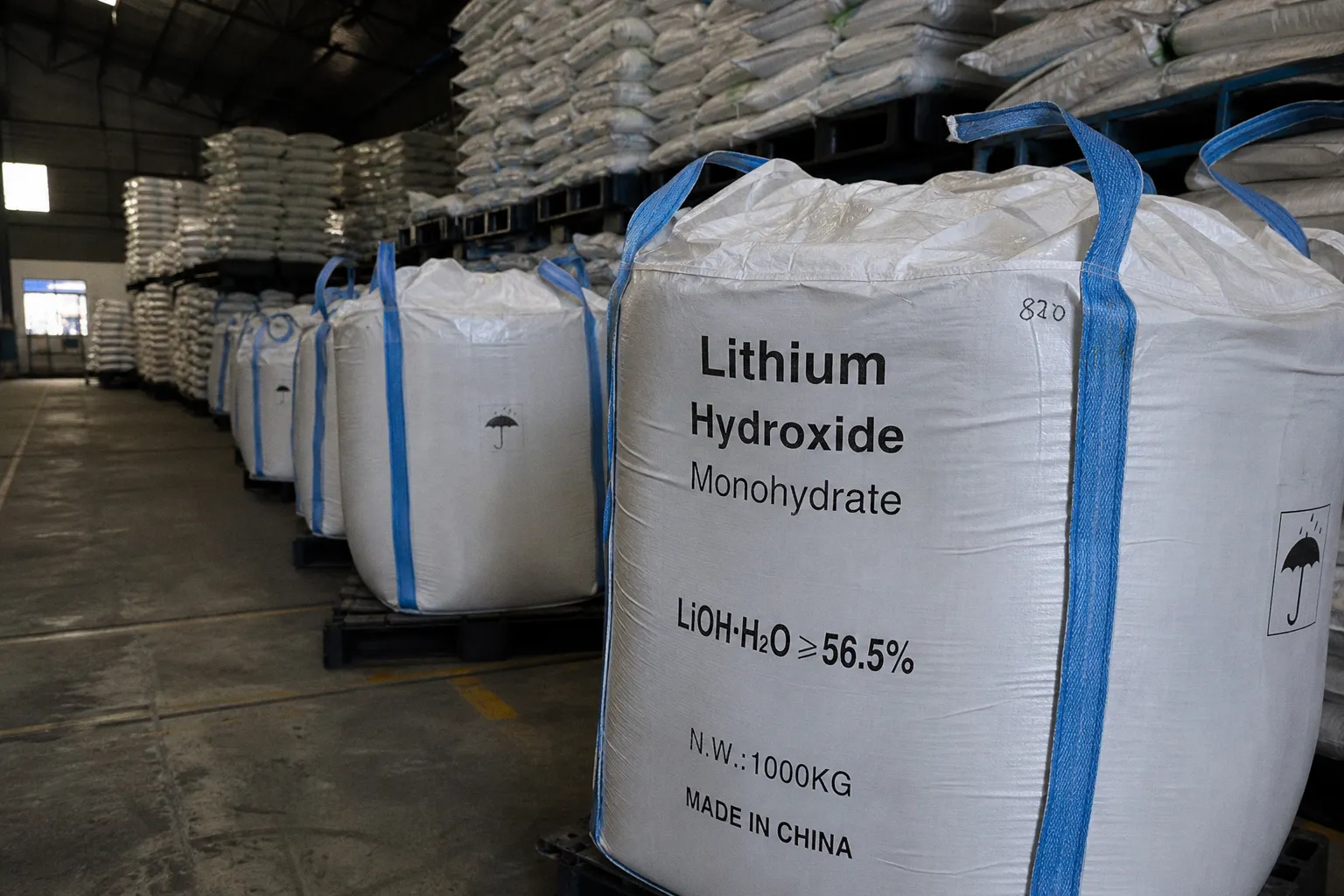
The Chemical Divide: Why Lithium Hydroxide and Carbonate Futures Are Not Interchangeable
If you arrived at COMEX looking for lithium carbonate futures in the same way you would source copper or gold contracts, you will not find a primary, high-volume instrument waiting for you. The CME lithium product is hydroxide, and only hydroxide. Understanding why that matters — and where the carbonate liquidity actually lives — is the difference between an informed position and an expensive misunderstanding.
Decoding the COMEX Lithium Hydroxide Monohydrate Contract
The CME Group's Lithium Hydroxide Monohydrate CIF CJK (Fastmarkets) Futures contract is, at its structural core, a cash-settled instrument benchmarked to the Fastmarkets assessment index. There is no physical delivery. The contract unit is one metric ton. The minimum price fluctuation — the tick — sits at $0.50 per metric ton, which, given lithium's pricing in the tens of thousands of dollars per tonne range, represents an extraordinarily fine granularity that rewards precision but demands discipline.
For related context, see Day trading stocks, scalping, chart patterns and platforms.
The pricing basis — CIF CJK, meaning cost, insurance, and freight to China, Japan, and Korea — is not accidental. It reflects the geographic concentration of lithium hydroxide processing and cathode manufacturing in East Asia. Institutional hedgers whose supply chains terminate in those jurisdictions find the contract's delivery point geography useful; those whose exposure is primarily domestic American or European face basis risk that must be managed separately. This is not a trivial operational detail: a European cathode plant purchasing hydroxide on a spot basis denominated in euros, while hedging on a CIF CJK dollar-denominated futures contract, absorbs currency, freight, and regional premium mismatches that can erode — or amplify — the effectiveness of the hedge depending on volatility in each leg.
The distinction between lithium hydroxide and lithium carbonate on futures exchanges is not a matter of branding — it is a structural reflection of diverging battery chemistries and processing supply chains that will define commodity pricing for the next decade.
Liquidity, it must be noted, remains the persistent question for COMEX lithium. The contract was designed to serve institutional hedging demand, and while open interest has grown since inception, it has not achieved the deep, continuous liquidity that characterises the exchange's flagship metals products. This is not a defect of the contract's design so much as a reflection of the market's maturity — lithium futures, across all venues, remain a relatively young asset class. For traders accustomed to the razor-thin spreads and massive depth of COMEX gold or copper, the adjustment requires humility and a willingness to work orders with patience rather than aggression. Limit orders sit for hours or even days; market orders in size are punished with slippage that makes the cost of immediacy prohibitive for all but the most urgent hedging needs.
| Parameter | COMEX Lithium Hydroxide | GFEX Lithium Carbonate | LME Lithium Carbonate |
|---|---|---|---|
| Chemical form | Hydroxide monohydrate | Carbonate | Carbonate |
| Settlement | Cash-settled | Physical delivery | Physical delivery |
| Contract size | 1 metric ton | 1 metric ton | Varies by contract |
| Pricing basis | CIF CJK (Fastmarkets) | China domestic reference | CIF/FOB assessments |
| Primary geography | East Asia delivery points | Guangzhou, China | Global, Asia-weighted |
| Target hedger | Cathode manufacturers using high-Ni chemistries | LFP supply chain participants | Broader industrial consumers |
| Margin regime | CME SPAN | GFEX margin rules | LME clearing house |
Strategic Sourcing: Where to Trade Lithium Carbonate Futures
For those whose exposure runs to lithium carbonate rather than hydroxide — and the distinction is far from trivial — the relevant venues are not COMEX but rather the Guangzhou Futures Exchange (GFEX) in China and the London Metal Exchange (LME).
The GFEX lithium carbonate contract, launched in 2023, was a direct policy response to Beijing's strategic interest in establishing transparent, domestically anchored pricing for a metal that underpins its massive electric vehicle and energy storage manufacturing base. It is physically settled, meaning that at expiration, actual lithium carbonate changes hands — a mechanism that imposes a fundamentally different discipline on participants compared to cash settlement. Traders who are positioned into expiry must either take or make delivery, which filters out a certain class of purely speculative participant and anchors the contract's price more tightly to the physical market.
That said, GFEX lithium carbonate has its own set of access barriers for international participants. Registration requirements, position limit rules, and the need for a licensed Chinese futures broker or intermediary all add layers of operational complexity that COMEX-domiciled traders rarely face on their home exchange. The contract's price references are drawn from China's domestic spot market — assessed by agencies such as Shanghai Metals Market (SMM) and Asian Metal — which means that the settlement basis reflects Chinese warehouse economics, domestic freight rates, and the specific quality tolerances of Chinese cathode producers. A European or North American hedger using GFEX carbonate as a proxy for their own procurement costs inherits a China-specific basis that may or may not track their commercial reality, depending on the structure of their supply chain.
The LME's lithium carbonate offering provides an alternative for participants whose operations are more globally distributed or who prefer London's established clearing and margining infrastructure. Here, too, physical delivery underpins the settlement mechanism, and the contract has been calibrated to serve the broader industrial consumer base — glass, ceramics, and pharmaceutical producers alongside battery manufacturers — that relies on carbonate. The LME contract also benefits from the exchange's decades of experience in managing the logistics of physical metal delivery, from warehouse accreditation to assay dispute resolution, processes that are well understood by the exchange's existing member base.
For COMEX-domiciled traders, accessing GFEX or LME lithium carbonate requires navigating cross-exchange clearing arrangements, different margin regimes, and, in the case of GFEX, regulatory frameworks that may impose position limits or reporting requirements unfamiliar to Western market participants. This is not insurmountable, but it is a friction cost that must be priced into any strategy involving arbitrage or spread trading between hydroxide and carbonate venues. Execution desks that attempt cross-venue strategies without accounting for these frictions will find that their theoretical edge is consumed entirely by settlement mismatches, time-zone gaps in order management, and the cost of maintaining margin across multiple clearing houses simultaneously.
Battery Chemistry Impacts on Commodity Pricing Dynamics
The reason two chemically distinct lithium compounds command their own futures contracts — and why they cannot simply be substituted one for the other on a trading screen — lies upstream in the cathode manufacturing process. This is where commodity finance meets materials science, and where the careless assumption of fungibility goes to die.
Lithium hydroxide is the precursor of choice for high-nickel cathode chemistries — the NCM 811 and NCA formulations that dominate premium electric vehicle platforms, where energy density is the paramount specification. Tesla's long-range vehicles, BMW's i-series, and the high-performance segments of Korean and Japanese OEM production lines are, broadly speaking, hydroxide-fed. The manufacturing process demands the monohydrate form specifically; carbonate cannot simply be swapped in without additional processing steps — conversion to hydroxide via reaction with calcium hydroxide, followed by purification and crystallisation — that erode cost efficiency and introduce yield variability.
Lithium carbonate, by contrast, is the standard feedstock for LFP — lithium iron phosphate — cathode chemistry. LFP has experienced a remarkable resurgence in market share over the past several years, driven by its lower cost, superior thermal stability, and the absence of cobalt and nickel dependency. BYD's Blade Battery, Tesla's standard-range Model 3 and Model Y units produced in Shanghai, and an expanding roster of commercial vehicle and stationary storage applications are LFP. China's domestic EV market, which remains the world's largest, runs predominantly on LFP, and it is this demand stream that gives the GFEX carbonate contract its fundamental economic weight. By mid-2024, LFP's share of the global EV battery market had surpassed 50%, a milestone that would have seemed improbable five years earlier when high-nickel chemistries were considered the inevitable endpoint of cathode evolution.
The implications for futures traders are direct:
1. Hydroxide and carbonate prices do not move in lockstep. They are correlated — both are lithium, after all — but the correlation is imperfect and varies with shifts in cathode market share, EV subsidy policy, and the relative pace of mining investment in spodumene (hydroxide's primary feedstock) versus brine (carbonate's).
2. The hydroxide-carbonate price spread is itself a tradeable thesis. Widening spreads signal market expectations of high-nickel growth; narrowing spreads point toward LFP dominance. Institutional desks with the infrastructure to execute across venues can express a view on battery chemistry evolution through this spread.
3. Processing conversion costs impose a floor on arbitrage. Converting carbonate to hydroxide (or vice versa) is not free — it involves additional chemical processing, energy input, and logistics. This conversion cost, which fluctuates with energy prices and regional processing capacity, sets a boundary on how far the two prices can diverge before industrial arbitrageurs step in.
The practical takeaway for anyone constructing a lithium book: your choice of contract is not merely a logistical convenience. It is an implicit position on the future trajectory of cathode technology. If you are long hydroxide futures, you are — whether you intend it or not — expressing a view that high-nickel cathodes will maintain or grow their market share. If your thesis is LFP's continued expansion, your natural instrument is carbonate, and your natural venue is GFEX or the LME, not COMEX. Treating these contracts as interchangeable variants of "lithium" is the kind of error that separates traders who understand the commodity from those who merely hold positions in it.
Operational Realities of Cash-Settled Lithium Contracts
Cash settlement — the mechanism governing the COMEX hydroxide contract — is often treated as a footnote in contract specifications. It should not be. The settlement methodology determines, in a very practical sense, how the futures price relates to the physical market it purports to represent, and therefore how effective the contract is as a hedging tool.
In a cash-settled contract, the final settlement price is determined by a reference index — in this case, the Fastmarkets assessment of lithium hydroxide monohydrate CIF CJK. No physical metal changes hands. At expiration, long and short positions are reconciled purely through cash transfers based on the difference between the trader's entry price and the settlement index. This is elegant in its simplicity and eliminates the operational burden of warehousing, assaying, and delivering physical lithium hydroxide — a product that, unlike copper cathode or gold bars, has no centuries-old infrastructure for standardised physical exchange.
The advantage is accessibility. A portfolio manager in New York or London can hedge lithium hydroxide price exposure without ever touching the physical supply chain. The disadvantage is the basis risk between the index assessment and the trader's actual procurement or sales price. Fastmarkets' CIF CJK assessment reflects a specific geographic and delivery-point reality; if your supply chain does not terminate at a Chinese, Japanese, or Korean port, the settlement index may diverge meaningfully from your commercial exposure on any given day. This divergence is not theoretical — it manifests in every assessment window, driven by regional freight rate fluctuations, currency movements, and the specific grade differentials between monohydrate products sourced from different refiners.
GFEX's physical delivery model, by contrast, forces convergence between futures and spot because the contract terminates in the actual movement of lithium carbonate between accredited warehouses. This is more operationally demanding — traders must manage warehousing arrangements, quality specifications, and logistics — but it produces a price signal that is, in a philosophical sense, more honest. The futures price cannot drift sustainably far from the physical reality because arbitrageurs can always stand for delivery or tender material against a short position. For hedgers whose business runs on physical carbonate procurement, this convergence is not a convenience — it is the entire reason to use a futures contract in the first place.
Cash settlement liberates traders from the complexity of physical delivery; physical delivery liberates the market from the risk that futures prices become unmoored from commercial reality. Neither mechanism is superior in the abstract — the right choice depends on whether your objective is portfolio-level risk management or direct supply-chain hedging.
The hybrid approach — hedging portfolio-level lithium exposure on COMEX while managing physical procurement risk through GFEX or LME — is where the most sophisticated institutional desks operate. It requires infrastructure, cross-jurisdictional compliance, and a willingness to accept that no single contract will perfectly hedge every dimension of lithium exposure. But for those who build it, the payoff is a risk framework that reflects the actual structure of the lithium market rather than the simplified version that exists only in contract specification documents.
The Structural Outlook: Lithium as a Monetary Proxy
There is a deeper question embedded in the architecture of lithium futures — one that connects this industrial metal to the broader monetary environment that has distorted pricing across all real assets over the past half-decade. Lithium's explosive price history — from roughly $6,000 per tonne of carbonate in early 2020 to over $80,000 in late 2022, followed by a sharp retracement to below $15,000 by mid-2024 — has been driven not only by EV demand projections but by the same forces of historically low real rates, sovereign debt expansion, and the massive allocation of institutional capital toward assets perceived to be structurally scarce.
The green transition, as a policy phenomenon, is inseparable from fiscal stimulus. Governments worldwide have directed trillions of dollars toward decarbonisation mandates, EV subsidies, and battery manufacturing incentives — much of it financed through deficit spending and, in many jurisdictions, directly or indirectly through central bank balance sheet expansion. Lithium, as the critical input to the batteries that make this transition physically possible, has absorbed a portion of that monetary impulse. Its price behaviour is, in this sense, a barometer of sovereign commitment to industrial policy as much as it is a reflection of mining supply and cathode demand.
As real rates have normalised — painfully, from the perspective of asset prices inflated by a decade of near-zero or negative yields — lithium's price has corrected. This is not a coincidence. It is the monetary mechanism operating exactly as one would expect: as the cost of holding real assets rises relative to financial assets, speculative capital exits commodity long positions, and prices revert toward levels that reflect marginal production cost rather than monetary premium. The speed and severity of lithium's retracement — losing roughly 80% of its peak value in eighteen months — mirrors patterns observed in other cyclically sensitive industrial metals during periods of monetary tightening, and it reinforces the degree to which lithium's 2022 peak was inflated by the same liquidity dynamics that inflated valuations in equities, real estate, and other commodity sectors simultaneously.
For futures traders navigating this landscape, the lesson is structural rather than tactical. Lithium contracts — whether hydroxide on COMEX, carbonate on GFEX, or carbonate on the LME — are not merely instruments for expressing a view on battery demand. They are instruments for expressing a view on the credibility and sustainability of the fiscal-monetary architecture that underpins the green industrial policy consensus. When that consensus weakens — when sovereign budgets tighten, when subsidy programmes face political resistance, when the marginal dollar of deficit-financed industrial policy becomes harder to justify — lithium prices will reflect it, and the futures curves across all three venues will steepen or flatten accordingly.
The trader who understands this connection — who reads lithium futures not as a niche industrial commodity play but as a macroeconomic signal — possesses an analytical edge that no technical indicator on a five-minute chart can replicate. The spread between hydroxide and carbonate, the shape of the term structure on each contract, and the relative liquidity migration between COMEX, GFEX, and the LME all encode information about the evolving balance of power between state-directed industrial ambition and the market's increasingly sceptical assessment of its fiscal sustainability.
That is the scorecard. And it is settling in real time.