Why Refining Bottlenecks Are Driving Light Sweet Crude Premiums
Crude benchmarks fell. Crack spreads didn't follow. The IEA's July 2026 Oil Market Report placed refined product margins at four-year highs in early July while the OPEC Reference Basket slid $24.80 month-over-month to $89.75/bbl.
Year-to-date basket average held at $93.67 versus $72.04 for full-year 2025 — a gap signaling backwardation in crude is decoupling from downstream fuel pricing.
Throughput Bottleneck, Not Demand Story
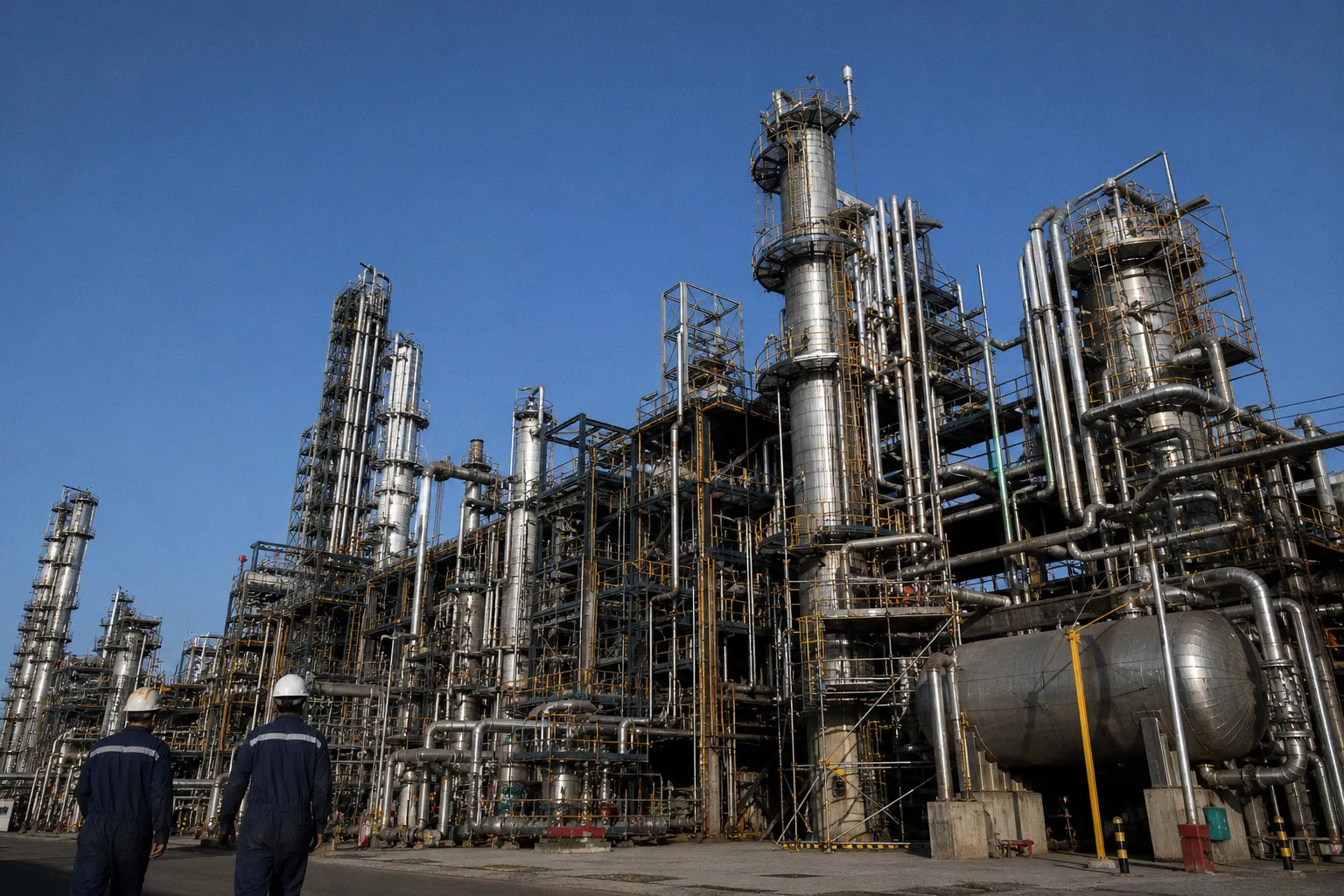
Global refinery runs sit approximately 6 million barrels per day below year-ago levels. Three structural legs: Middle East export refineries offline, Russian throughput curtailed after strikes on processing facilities, Asian utilization rates running below norms. EIA data for the week ending July 10 placed U.S. refinery utilization at 96.2% — near ceiling — with crude inputs averaging 17.1 million bpd. Commercial crude stocks (ex-SPR) fell 1.7 million barrels to 409.7 million, roughly 6% below the five-year seasonal mean. Distillate inventories built 4.6 million barrels, yet national average retail diesel still rose $0.218 to $4.796/gallon. Inventories up, price up — classic refining capacity squeeze. The digital trading infrastructure monitoring these flows is seeing the same signal: margins divorced from headline crude.
Light Sweet Premium Repricing
The capacity shortfall mechanically favors light, sweet grades. Fewer cracking stages, higher yield of diesel and jet fuel per barrel, lower processing cost. When utilization hits the wall, the marginal barrel of light sweet commands a premium because constrained refiners optimize for yield over volume. Reports indicate global refining margins touched $59/bbl at peak — a level that reprices the entire light sweet complex relative to medium-sour differentials. This isn't a geopolitical risk premium unwinding; it's a throughput bottleneck repricing quality. Middle East refinery restarts remain delayed. Even if regional conflict eases, capacity recovery lags risk sentiment by weeks, potentially months.
Downstream Cost Sensitivity
The pass-through is quantifiable. At open-pit mining operations, diesel accounts for 15–30% of operating costs — haul trucks, excavators, drill rigs, on-site generation. At $4.796/gallon retail, the cost pressure is live. Jefferies' model estimates a 10% increase in crude translates to roughly $10/ounce in additional production costs at the average open-pit gold mine. With the OPEC basket YTD running 30% above 2025 levels, that sensitivity is already priced into marginal cost curves. Watch the crack spread structure through Q3 — if Middle East capacity doesn't normalize, light sweet premiums extend, and diesel-intensive operators absorb margin compression. The term structure is the tell.