U.S. refining capacity decreased during 2025
Operable U.S. atmospheric distillation capacity printed 18.2 million b/cd on January 1, 2026, per the EIA Refinery Capacity Report. Net delta: minus 250,000 b/cd year-over-year, roughly 1%.
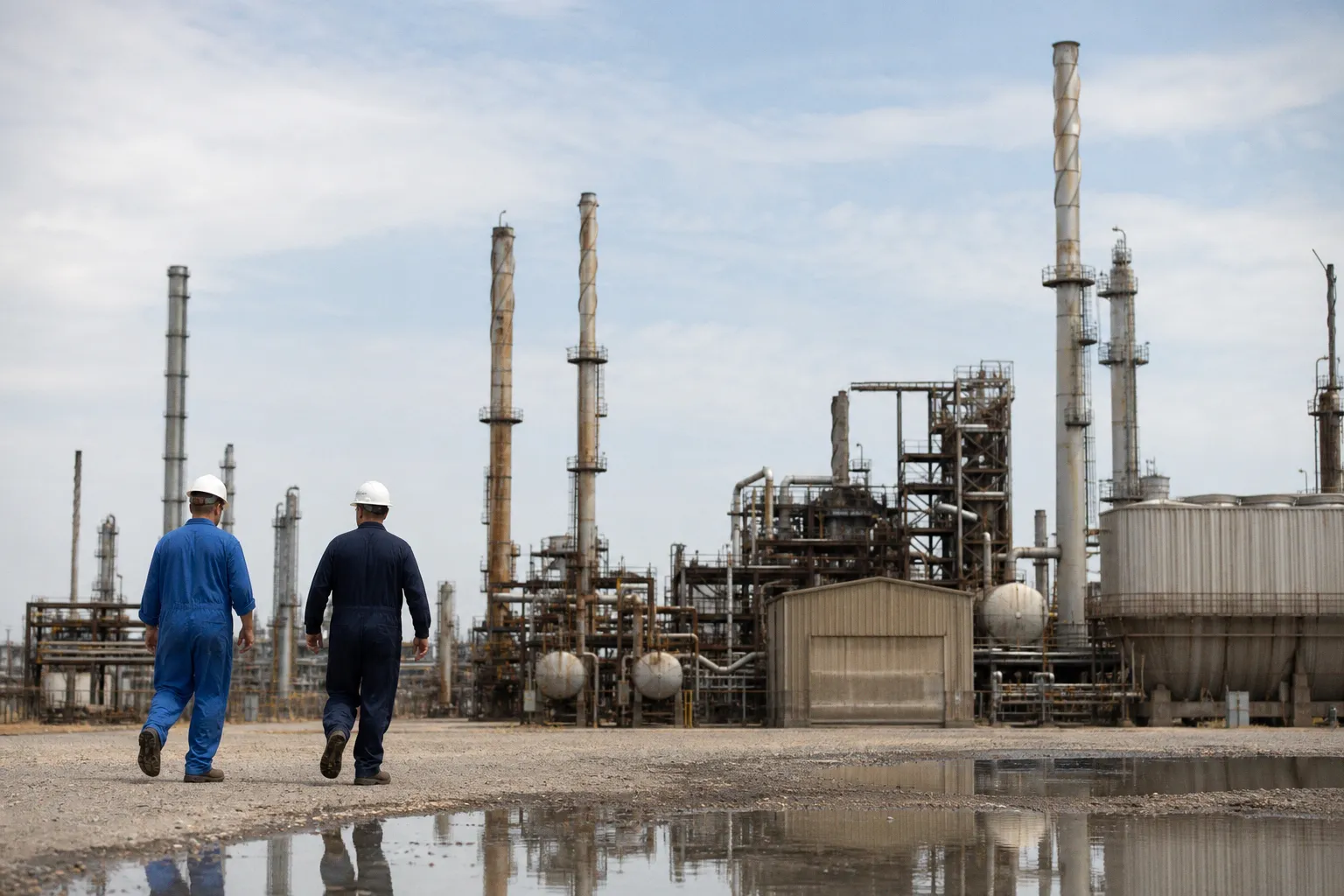
PADD 5 — structural deficit
Phillips 66 shut its 138,700-b/cd Los Angeles refinery in October 2025. Regional result: a 5% reduction in PADD 5 operable capacity. Pipeline throughput from the U.S. Gulf Coast into the West Coast remains insufficient to backfill the loss with marginal barrels. Valero's 145,000-b/d Benicia refinery was still listed in the January 1 report but has since ceased refining; EIA removed it from monthly capacity estimates as of March 2026. PADD 5 now sits at a structurally tighter equilibrium heading into the summer drive cycle.
Trading read: PADD 5 product cracks versus PADD 3 widen on the print. CARB-grade RBOB basis against Gulf Coast RBOB tightens. The constrained pipeline arb keeps physical barrels locked in-region. Backwardation in West Coast product forwards steepens versus Gulf Coast equivalents. Open interest in PADD 5-cleared product contracts is the cleanest positioning gauge.
PADD 3 — offset absorbs the shock
LyondellBasell ended refining at its 263,776-b/cd Houston facility in March 2025. Regional effect: a 3% reduction in PADD 3 capacity. Other Gulf Coast operators posted marginal increases. Net regional delta: less than 2% decline for 2025. PADD 3 retains its structural product exporter status.
Positioning read: PADD 3 product cracks compress on offset volumes. Any divergence from the Brent-based 3-2-1 crack warrants monitoring. Marathon, Valero, and ExxonMobil—the top three U.S. refiners—each reported calendar day capacity increases below 1%. The signal reads as process debottlenecking, not expansion. Phillips 66 dropped to fourth-largest on the LA closure; Chevron overtook PBF Energy for fifth on marginal additions.
Levels and expiries to track
PADD 5 gasoline and diesel basis differentials versus PADD 3. Confirmation of Valero Benicia removal in subsequent monthly capacity tables. Any further announced closures or renewable diesel conversions that strip distillate-yielding capacity. RBOB and ULSD open interest shifts following the structural PADD 5 deficit. Heating oil-gasoline crack heading into Q4. Calendar day versus stream day utilization: stream day runs roughly 6% above calendar day, defining the operational ceiling on any utilization spike. Gamma exposure at key strikes in the next two monthly RBOB options expiries marks the next inflection point.