How Russian Refinery Disruptions Are Driving a Global Mining Cost Crisis
Diesel forward curves inverted. Crack spreads widening. Russian refinery throughput at 21-year lows.
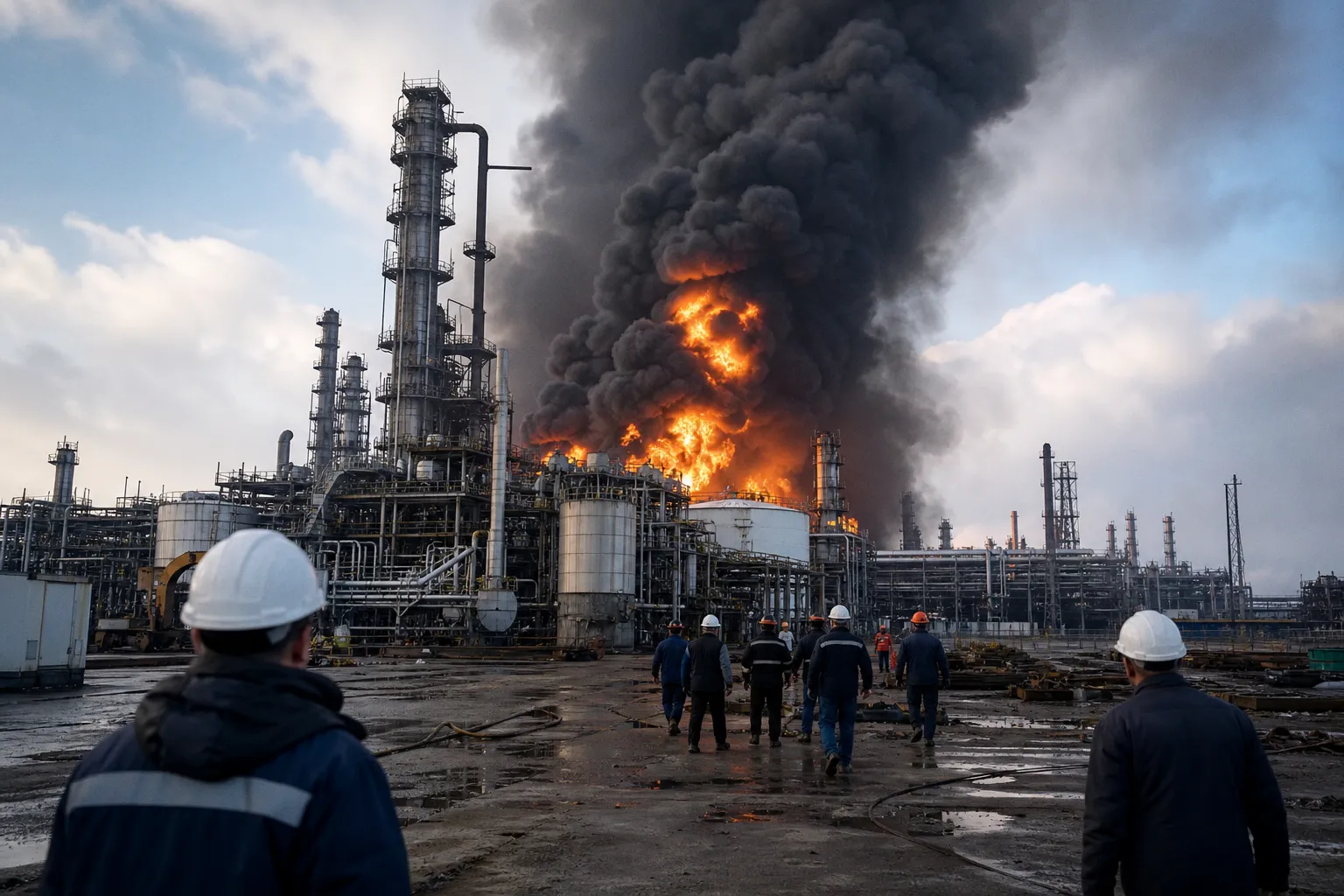
Ukrainian strikes have systematically dismantled Russia’s refining infrastructure. At least 24 of 34 large refineries attacked. Omsk, Kirishi, Norsi, Moscow refinery damaged or offline. Processing averaged 3.91M bpd early July—1.4M bpd below prior year. St. Petersburg exchange data: June fuel sales down 38% YoY, weighted prices up 37%.
Supply Shock, Quantified
Refinery capacity loss is structural. Repeat strikes prevent repairs. Moscow refinery may remain offline through year-end. Primary distillation units—the equipment separating crude into feedstocks—suffered direct hits. This removes processing capability, not just throughput.
Market pricing reflects the deficit. Daily gasoline and diesel sales on SPIMEX fell from 118-150k tonnes (Jan-Mar) to 80.3k tonnes in June. Backwardation steepening in ICE gasoil. Spot premiums in Asia and Europe widening against futures.
Mining Cost Basis Recalibration
Diesel is the primary energy input for mining operations: haulage, power generation, drilling. The cost basis for gold, copper, and base metals extraction shifts upward with each $0.10/gallon move in ULSD. Mining equities and project NPVs are repricing. Capital allocation models must now factor in a structurally higher energy floor.
Refinery constraints compound the issue. Petroperu expanding storage at Iquitos signals regional tightness. Phillips 66 refining margins expanding in TradingView data. The crack spread—diesel versus crude—is the key metric. Its expansion compresses margins for consumers while benefiting refiners and traders positioned long the spread.
Technical Levels & Expiry Focus
September ULSD futures (HOU26) are the immediate benchmark. Watch the $3.80/gallon pivot. A close above targets $4.10, aligning with 2022 highs. Open interest building in $4.00 calls for October expiry.
The term structure (calendar spreads) is the leading indicator. A shift from contango to sustained backwardation signals physical shortage. Track the Oct/Nov spread. Widening implies storage draws accelerating.
Macro liquidity flows are shifting. Tightening fuel markets intersect with capital moving into tangible assets. Recent data shows global fintech funding hitting USD 4.52 Bn in June, with increased allocation to commodity-linked and digital asset infrastructure. This parallels the physical market’s search for inflation hedges.
Monitor Russian export bans. Any reversal in gasoline/jet fuel/diesel restrictions would alleviate pressure. Until then, the cost-of-production equation for miners is repricing higher. Derivatives positioning reflects this. Adjust models accordingly.