Silver bullion coins: how to buy with lowest premiums
The spot price is a number on a screen. The coin in your hand is a physical object that had to be mined, refined, stamped at a sovereign mint, packaged, shipped across borders, warehoused, and insured before it ever crossed a dealer's counter.
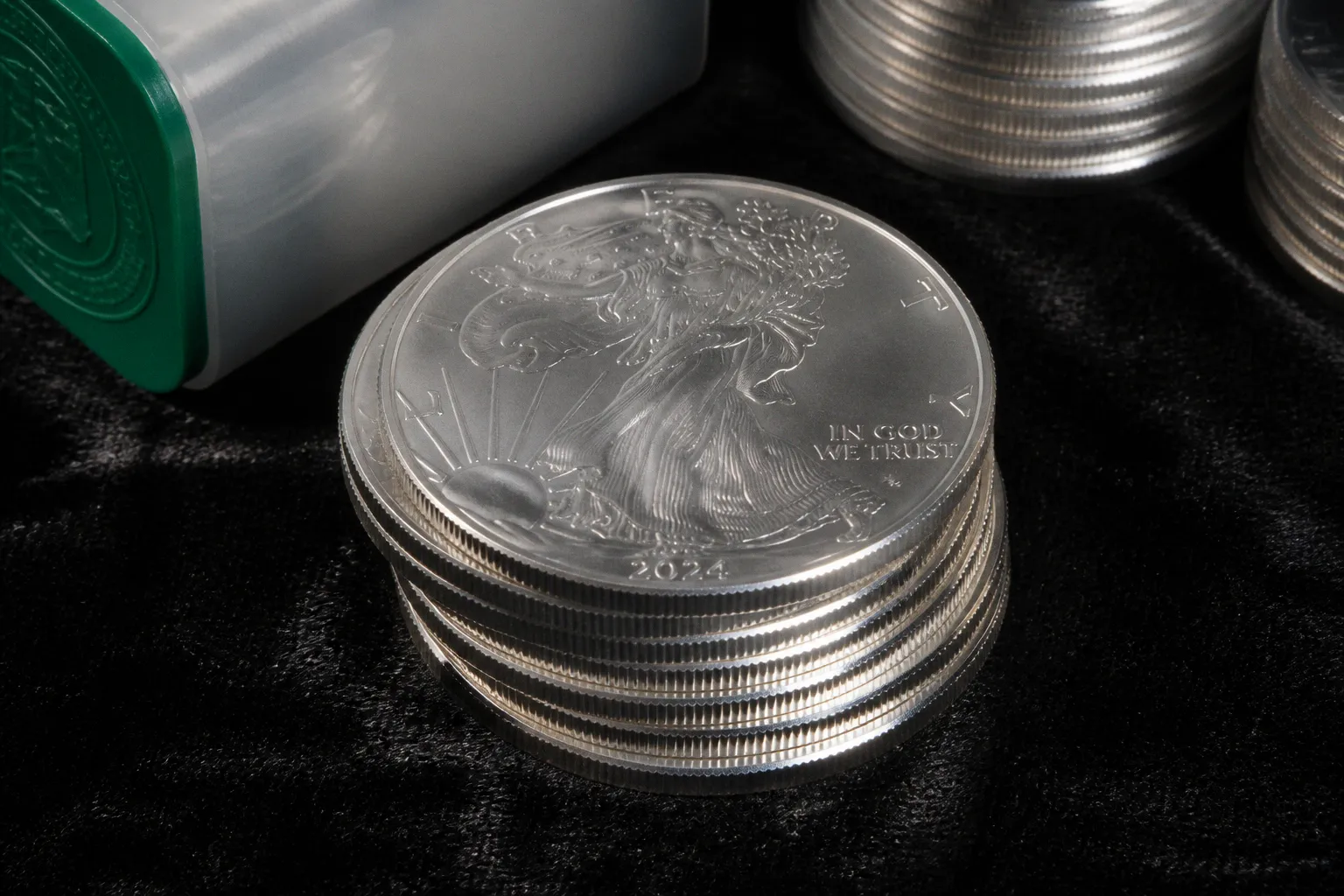
For anyone buying silver bullion coins right now, that distinction matters more than the spot quote. A 3% drop in spot can come paired with a 20% spike in retail premiums when industrial buyers tighten the physical market. A rising spot doesn't necessarily mean cheaper coins at the counter. The two prices move on different rails, and conflating them is the most expensive mistake a new buyer makes.
The spot price tells you what silver is worth in paper form. The premium tells you what it costs to actually hold the metal.
What you're actually paying for: deconstructing the premium
The premium isn't a single number — it's a stack of cost layers that the dealer absorbs and passes through.
Fabrication and minting. Sovereign coins carry higher premiums than generic rounds because they go through government mints with stricter quality control, anti-counterfeiting features, and — critically — legal tender status. That status isn't decorative. It changes how the coin crosses borders, how it gets insured, and how easily it can be verified at resale. None of that is free.
Distribution and logistics. A tube of 20 to 25 coins has to be shrink-wrapped, boxed, shipped from the mint, and then either warehoused by the dealer or forwarded to a secondary distributor. Freight rates, insurance, and storage costs are baked into every coin sitting in the dealer's vault.
Dealer margin. This is the variable piece. It runs from razor-thin on monster boxes moving at wholesale volume to 30-40% over spot on a single coin pulled from the display case for a walk-in retail buyer. Same coin, same day, same dealer — different margin depending on quantity and channel.
Brand premium. This sits on top of fabrication cost. An American Silver Eagle trades at a higher premium than an Austrian Philharmonic of the same weight, not because of silver content but because of U.S. Mint branding, secondary market depth, and the size of the dealer network willing to take it back. Brand recognition has a measurable price tag.
Scale breaks the spread: why monster boxes beat singles
A monster box — 500 coins, sealed at the mint — is the wholesale unit of the silver coin market. Dealers pay less per ounce for these because they're sourcing direct from the mint or a primary distributor at volume. That cost differential flows downstream to whoever is buying at the retail level.
Walk into a dealer and buy a single Silver Eagle. You'll typically pay somewhere in the 15-40% over spot range, depending on the dealer and current market conditions. Order a monster box, and the per-ounce premium compresses substantially because the dealer isn't handling, counting, and packaging individual units. The fixed costs of the transaction get amortized across 500 coins instead of one.
The same logic applies at the tube level. A tube of 20-25 coins gets a better premium than five individual coins bought separately, though the savings aren't as dramatic as the jump to a full monster box.
For buyers with capital to deploy, the math is straightforward:
| Purchase quantity | Typical premium impact |
|---|---|
| Single coin | Highest per-ounce premium (15-40%+ over spot) |
| Tube (20-25 coins) | Moderate discount from single-coin pricing |
| Monster box (500 coins) | Lowest per-ounce premium available to retail buyers |
The practical constraint: a monster box is heavy. 500 troy ounces of silver weighs roughly 34 pounds before the sealed mint box itself is added. Storage and insurance costs need to be factored in. But for anyone stacking weight who can absorb the upfront capital, the per-ounce cost differential versus buying singles is where the real savings compound over time.
Secondary market: sovereign quality, discounted pricing
This is where most retail buyers leave money on the table.
A "secondary market" or "random year" Silver Eagle is the same coin as a current-year Eagle — same silver content, same legal tender status, same U.S. Mint manufacture — but it isn't this year's issue. It might be from 2018, or 2014, or any year the U.S. Mint ran production. To a stacker, the date is irrelevant. To the dealer, the absence of current-year collector demand means a lower acquisition cost, which translates to a lower premium charged at resale.
Dealers source these from estate liquidations, bank distribution programs, IRA distributions, and customers trading in older coins for newer issues. The inventory turns over constantly, and the pricing is typically the closest thing to a spot-plus-handling-fee structure you'll find in the sovereign coin market.
The tradeoff: you don't get to choose the year. If having a current-year coin matters to you — for a specific collection, a gift, or some perceived resale advantage — this channel doesn't work. But if the goal is acquiring sovereign-minted silver at the lowest possible premium, secondary market coins are difficult to beat on a pure metal-per-dollar basis.
Sovereign versus generic: where the "best" coin depends on exit strategy
The American Silver Eagle, Canadian Maple Leaf, Austrian Philharmonic, British Britannia, and Australian Kangaroo are the heavyweights of the sovereign silver market. Each trades at a premium to spot, but the premium varies — and the gap matters when you eventually want to liquidate.
| Coin | Typical premium structure | Secondary market liquidity |
|---|---|---|
| American Silver Eagle | Highest premium among major sovereigns | Deepest secondary market, easiest resale in North America |
| Canadian Maple Leaf | Moderate premium | Good liquidity in North America and Asia |
| Austrian Philharmonic | Lower premium | Moderate liquidity, stronger in Europe |
| British Britannia | Moderate to high | Good liquidity in UK and Commonwealth markets |
| Generic silver rounds | Lowest premium | Thinnest secondary market, harder to resell at scale |
The "best" silver bullion coin depends on what you're actually optimizing for. Maximum resale flexibility in the U.S. market? Silver Eagles, despite the premium. Lowest entry cost per ounce? Generic rounds or Philharmonics. International liquidity? Britannias or Maples. A coin that's hard to resell at scale isn't a savings — it's a liquidity trap with a lower entry cost and a higher exit friction.
Why premiums swing independently of spot
Here's where the physical supply chain reasserts itself over paper pricing.
Silver has dual demand: investment demand (coins, bars, ETFs) and industrial demand (solar panels, electronics, brazing alloys, EV powertrains). When industrial buyers tighten the physical market — pulling refined silver into manufacturing channels — the supply available for coin and bar production gets squeezed. Mint allocation tightens. Dealers compete for limited inventory. Premiums rise.
This isn't theoretical. The 2024-2025 period saw exactly this dynamic play out, with industrial demand from solar manufacturing pulling physical silver into channels that compete directly with the investment market. Spot prices moved. Premiums moved more, and faster.
Track the premium, not the screen. Premium volatility outpacing spot movement is the supply chain telling you something the paper market isn't.
The takeaway for buyers: tracking spot price alone is insufficient for anyone transacting in physical metal. The premium tells you what the physical market is actually doing — and when premium volatility outpaces spot movement, that's the signal that industrial demand is dominating the tape.
The practical move: what actually lowers your cost per ounce
Pulling the threads together, the path to lower premiums on silver bullion coins isn't complicated. It's specific.
1. Buy in bulk. A monster box at the lowest available premium beats any collection of singles, regardless of how aggressively you shop individual coins.
2. Source from secondary market. Random-year sovereign coins carry less premium than current-year issues and offer identical metal content with the same legal tender status.
3. Match coin to exit market. An Eagle premium is worth paying if you can resell an Eagle easily in your region. It's wasted money if your local market wants Maples or Britannias.
4. Track premiums, not just spot. The premium tells you more about physical supply conditions than the spot quote. When premiums spike, the supply chain is sending a signal the screen isn't.
5. Skip numismatic premiums. Collector value and bullion value are separate markets. If the coin is for stacking weight, the date and condition don't matter — and paying extra for them is capital that won't return at melt pricing.
The bottom line
The cheapest silver bullion coin isn't the one with the lowest advertised price. It's the coin carrying the lowest premium over spot, sourced at scale, matched to your resale market, and acquired when physical supply isn't being absorbed by industrial demand spikes.
The supply chain doesn't care about the spot price. Neither should your buying strategy.