Financial hedging strategies for volatile commodity markets
When the cathode starts piling up on a warehouse floor faster than trucks can move it, the price on the screen in London or New York is the last thing on a smelter manager's mind. But it's the only thing keeping the lights on.
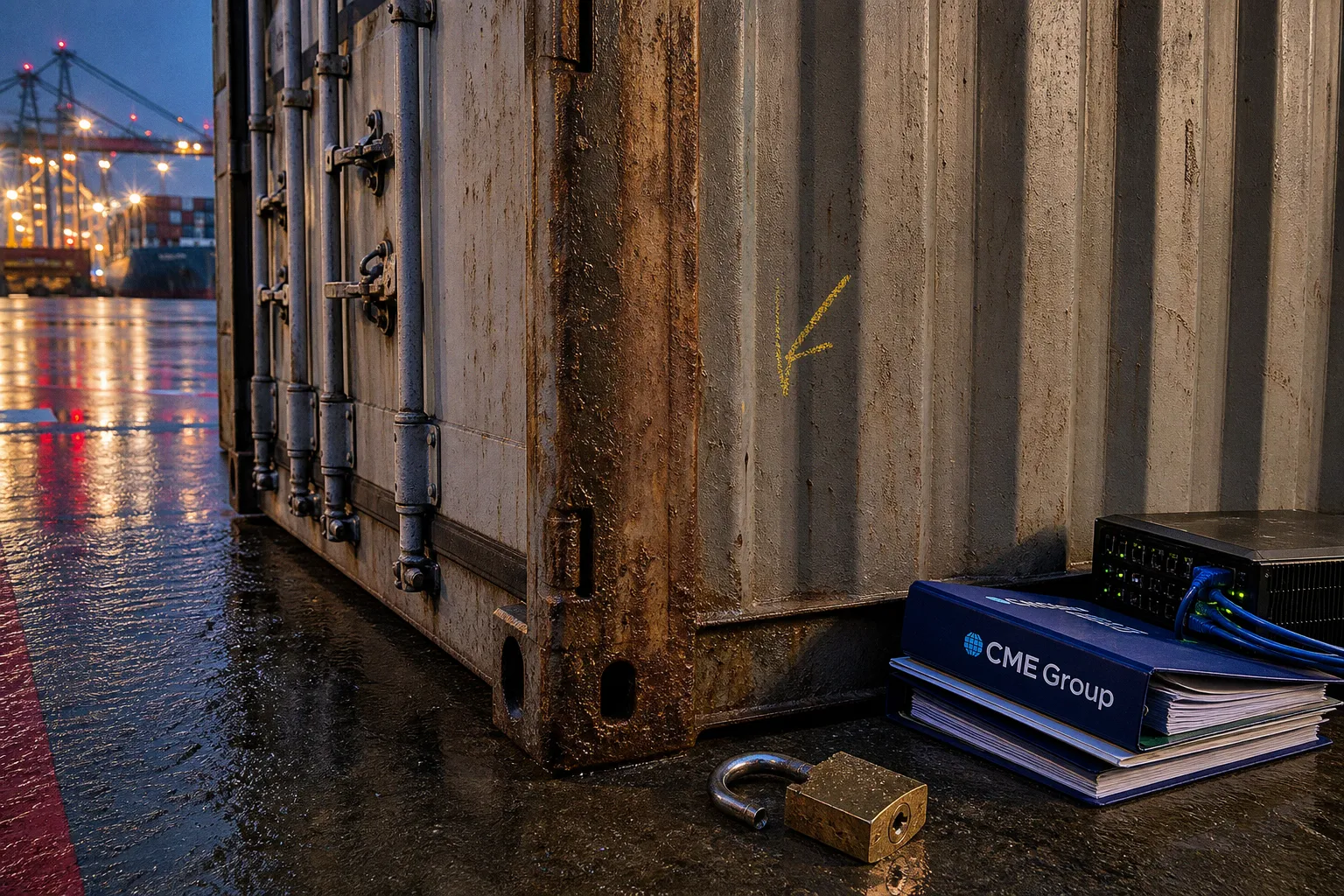
This isn't theory. Producers, merchants, and end-users run real tonnage through these contracts every quarter, and the mechanics have consequences: margin calls drain working capital, wrong-way hedges blow up inventory books, and a clearing house standing between buyer and seller is the only reason half these trades clear at all.
The core mechanic: making a paper loss offset a physical gain
Strip a hedge to its frame and it's almost embarrassingly simple. You hold the commodity in the physical world — a silo of wheat, a tank of distillate, a hold full of aluminum — and you take the opposite position in a derivative contract. When the spot price falls, the physical position loses value, but the short futures position gains roughly the same amount. The difference between the two prices — the basis — is the gap that determines how clean the hedge actually is. The losses are meant to cancel out. That's it.
Hedging doesn't make prices less volatile. It moves that volatility off a balance sheet that can't absorb it and onto a derivatives book that can.
Three things make this work in practice, not in textbook diagrams:
- Contract size matched to your exposure. Crude oil futures on CME run at 1,000 barrels per contract. If you're hedging a 500,000-barrel storage position, that's 500 contracts. Mismatch the size and you're either underhedged or paying margin on volume you don't need.
- Liquidity at the contract you need. Hedges are only as good as your ability to roll or exit. A thinly traded contract is a stuck contract, and a stuck hedge is just an open speculative position in disguise.
- A working knowledge of basis. The futures price and the price you'll actually receive at the dock diverge — sometimes violently, especially for physical-delivery contracts where location, grade, and delivery window all carry a premium or discount.
Long vs. short hedges: who needs which depends on which side of the commodity you sit
The directional language is the easiest part. A short hedge belongs to the producer — the miner, the farmer, the refiner — sitting on inventory or future production and terrified of price drops before they can sell. Sell futures against what you haven't sold yet, lock the price, sleep.
A long hedge belongs to the consumer — the airline buying jet fuel, the breakfast-cereal company locking in corn costs, the utility that doesn't want energy-derivative prices dictating retail rates. Buy futures to fix an input cost before the invoice arrives.
The interesting failures happen when firms get this backward, or worse, dress a directional bet up as a hedge. A speculative position labeled "hedge" is still speculative. If your CFO signed off on a program that took the same side as your physical book, you didn't hedge — you doubled down. Plenty of distressed industrial hedgers learned this the hard way around 2008, and again during the 2020 oil dislocation when negative front-month crude prices exposed anyone whose "hedge" was really a leveraged long.
There's also the matter of stack-and-roll operations when physical inventory sits for months. You keep selling front-month contracts and rolling them forward as they expire, eating the contango (or, if you're lucky, capturing the backwardation) along the way. Roll yield is a real line item on the P&L, and on certain metals and energy contracts it has been negative for extended stretches. When the curve is sharply upward, rolling costs eat the protection.
When options make more sense than futures
Futures lock the price in both directions. That's efficient when you want certainty and corrosive when you don't — because a perfect hedge also means you wave goodbye to favorable moves. If copper rips after you short the LME, you don't share in that upside. Options fix this asymmetry, at a price.
A put option bought by a producer gives the right, not the obligation, to sell at a strike price. Spot can still rise; you simply let the option expire worthless, having paid only the premium. The ceiling on protection is your premium cost; the floor is your strike.
A call option bought by a consumer caps input cost without sacrificing the ability to benefit from falling spot. It's a one-way insurance policy, paid up front in cash.
This is where the language of asymmetry becomes practical. Options cost real money — premiums on industrial-metals contracts can run into six figures for a meaningful book — but they never generate a margin call in the same way a naked short futures position can. Some treasuries and risk committees accept this tradeoff gladly. Others demand the ironclad coverage of futures and pay for it through missed rallies.
A quick note on newer-ish derivatives: the perpetual futures contracts that blew through crypto and are now edging into adjacent markets — explored in this look at perp futures pressuring legacy Wall Street structures — borrow the margin and leverage language of commodity futures without the dated expiry. They aren't a direct substitute for a physical-position hedge (no expiry means no roll, but also no convergence to spot), but they explain why "futures" no longer means only what the CME and LME say it means, and why a working hedger has to know what they're actually trading.
Margin mechanics: where the actual liquidity risk lives
For most working commodity businesses, margin is where hedges hurt. It isn't the directional price risk; it's the daily variation margin — the mark-to-market cash that moves between your account and the clearing house when prices move against you.
CME Group's standard structure separates two tiers of capital:
- Initial margin. Posted when the position opens. Set against expected volatility and contract notional, recalibrated regularly as market conditions shift.
- Maintenance margin. A lower threshold; the floor that must remain in the account to keep the position open. When your account drops below maintenance, you face a margin call — top up to initial within a defined window, or the position gets force-closed by the clearing house.
That force-closing is the part CFOs lose sleep over. A copper producer sitting on a short hedge when prices gap 8% overnight can be forced to liquidate a physical position to meet a margin demand unrelated to actual business performance. Plenty of firms keep revolving credit lines or post cash collateral specifically for this — the so-called "margin liquidity buffer" — precisely because the call arrives on a Tuesday and the working-capital cycle doesn't. Margin policy is market policy, whether or not anyone frames it that way.
Multiplier and tick values aren't decorative. Crude's 1,000-barrel contract means a one-dollar move is $1,000 per contract. Aluminum on the LME moves in $0.50 ticks on a 25-tonne lot — that's $12.50 per tick — and at any given moment an industrial book can have hundreds of contracts on. The numbers stop being abstract the first time a treasurer opens a margin statement.
Counterparty risk: why the clearing house sits where it sits
Before clearing houses became the default plumbing of derivatives trading, two parties on opposite sides of a trade had to trust each other to perform. A grain elevator selling to a flour mill six months forward had six months of credit exposure. If either went bust between trade date and delivery, the surviving party took a loss on a contract they'd already locked into their budget.
Centralized clearing collapsed that risk. The clearing house — CME Group for most U.S. futures, LME Clear for London metals — inserts itself as buyer to every seller and seller to every buyer. Each side faces the clearing house, not each other. Default risk is mutualized through a guarantee fund and rigorously margined positions, and trades settle even if one of the original counterparties disappears.
This is one of the cleanest pieces of financial plumbing ever built, and the practical effect is that two firms that would never extend each other credit can transact on a standard contract. Industrial hedgers get access to liquidity they'd never secure bilaterally; speculators get the same access from the other side. Liquidity provider meets liquidity taker without either having to underwrite the other's solvency.
It also means the clearing house is the real risk manager in the system. When it tightens margin — as happened across energy contracts during the 2022 volatility spike, and selectively in metals when prices gapped — every participant feels it simultaneously. That posture flows straight through to spot.
What this means for near-term positioning
Hedging is a working tool, not a strategy for predicting prices. Firms that run it well treat it as a fixed cost of doing physical business — like insurance, like demurrage, like warehouse leasing. The ones that run it badly treat it as a free option to be clever with, and the ones that end up on the news treated it as a guaranteed profit center.
For anyone sitting on real exposure to a commodity price — long a position that produces, short a position that consumes — the questions stay the same. Can your balance sheet absorb a margin call without disrupting operations? Do your contracts actually match your exposure in size and tenor? Have you stress-tested the basis between your physical market and the contract you're hedging with? Do you need upside participation, or just a floor?
Answer those honestly and the rest is mechanical. Get them wrong and no amount of structured product, exotic option, or clever roll strategy will save the budget.
And here's what the desk tends to forget: hedging flows aren't separate from spot. When merchant books pile short-dated, when producers roll forward in size, when allocator money lands in commodity index products, those flows show up in open interest and in basis. The spot print everyone watches is the residual of all those books. Run enough real volume and your hedge program stops being a back-office concern. It becomes a contributor to the price other people read.
Hedging is a fixed cost of running tonnage through the real economy. Anyone who treats it as a profit strategy is about to learn that volatility is two-sided.